



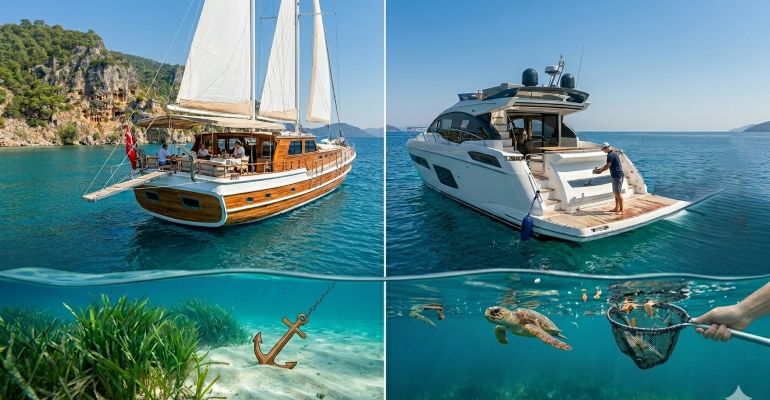
A Blue Future from Marmaris to Göcek
A Guide to Preventing Marine Pollution and Responsible Yachting
The stretch of coastline between Marmaris and Göcek is arguably one of the most stunning maritime routes in the world. With its hidden "aquarium" bays, pine-fringed shores, and ancient ruins accessible only by boat, it is a sailor’s paradise.
However, paradise is fragile. As the popularity of yachting grows, so does our responsibility to protect the very waters that give us life. If we want to ensure a "Blue Future," we need to move beyond simple sightseeing and embrace responsible yachting.
1. Mastering the Blue Card System (Mavi Kart)
In Turkey, environmental protection isn't just a suggestion; it’s regulated. The Blue Card (Mavi Kart) system is your digital identity for waste management.
- How it works: Every yacht must record the discharge of wastewater (black and gray water) at designated pump-out stations.
- The Golden Rule: Never, under any circumstances, discharge your tanks in the coves. Not only is it illegal and subject to heavy fines, but it also destroys the crystal-clear visibility we all love.
2. Anchor with Awareness: Protect the Seagrass
Beneath the turquoise surface lies Posidonia oceanica, or Neptune Grass. These underwater meadows are the "lungs of the Mediterranean," providing oxygen and a nursery for marine life.
- Check the bottom: Before dropping anchor, ensure you are over sand, not a dark patch of seagrass.
- Use mooring buoys: Whenever available, use established mooring buoys to prevent your anchor chain from "plowing" the seabed.
"We don’t inherit the sea from our ancestors; we borrow it from our children. Every piece of plastic kept off the deck is a victory for the Gulf of Fethiye."
3. The "Eco-Friendly" Galley and Head
Responsible yachting starts with what you bring on board. Everything that goes down your sink or touches your skin eventually ends up in the sea.
- Microplastics & Packaging: Provision with a "zero-waste" mindset. Choose glass over plastic and buy in bulk to reduce single-use wrappers.
- Biodegradable Products: Use marine-safe soaps, detergents, and shampoos. Standard household cleaners contain phosphates that trigger harmful algae blooms.
- Reef-Safe Sunscreen: Many sunscreens contain oxybenzone, which is toxic to marine ecosystems. Look for mineral-based (zinc oxide) alternatives.
4. Waste Management: Secure the Deck
The winds in the Aegean and Mediterranean can be unpredictable. A light breeze can turn a stray chip bag or a plastic cup into marine debris in seconds.
- The "Wind-Proof" Rule: Keep all trash in secured, weighted bins.
- Leave it Better: Make it a habit to pick up any floating debris you see during your swim. If you find trash on a remote beach in Bedri Rahmi Bay or Tersane Island, take it back to the mainland for proper disposal.
5. Conscious Cruising
How you handle your vessel matters as much as how you handle your trash.
- Slow Down: High speeds near the coast create wakes that erode shorelines and disturb shallow-water habitats.
- Engine Maintenance: Ensure your engine is well-maintained to prevent oil or fuel leaks. A single drop of oil can contaminate thousands of liters of water.
Final Thoughts
Sailing from Marmaris to Göcek is a privilege. By practicing responsible yachting, we aren't just following rules—we are becoming stewards of the sea. Let’s keep the "Blue" in our future so that the sailors of 2050 can enjoy the same pristine waters we do today.
Fair winds and clean seas!